Sheet metal work
Our industrial capability for your sheet metal parts
With the addition of a 12 kW fibre laser with a 4,000 × 2,000 mm working area, TPS is expanding its laser cutting and precision sheet metal business.
Home » Laser cutting
The real value of our laser lies in how it integrates with TPS’s other production cells to build complete manufacturing routings.
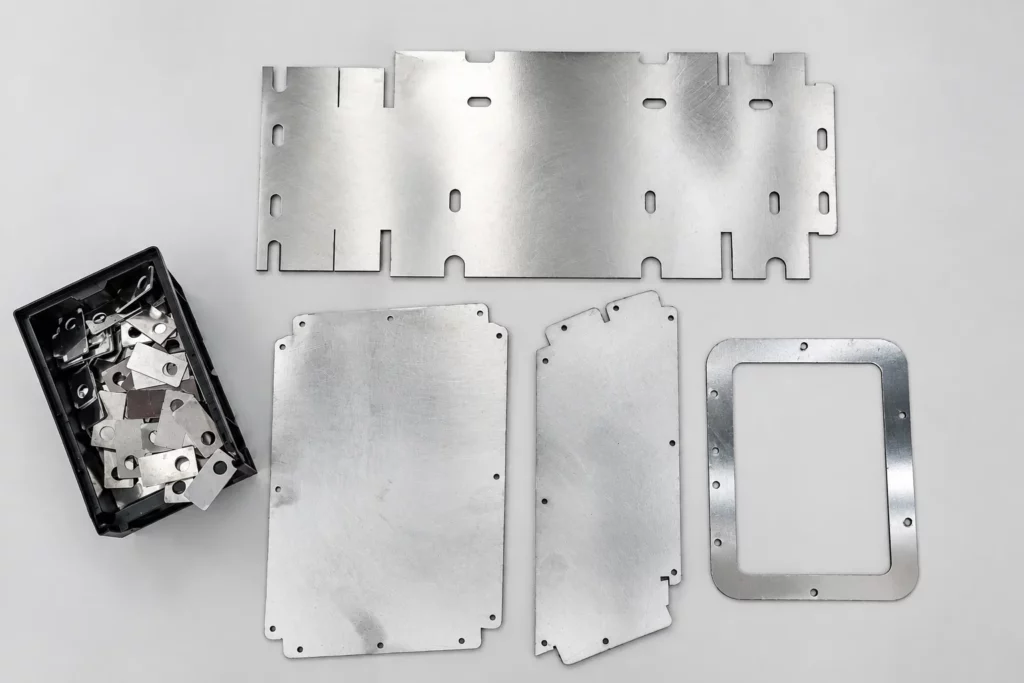
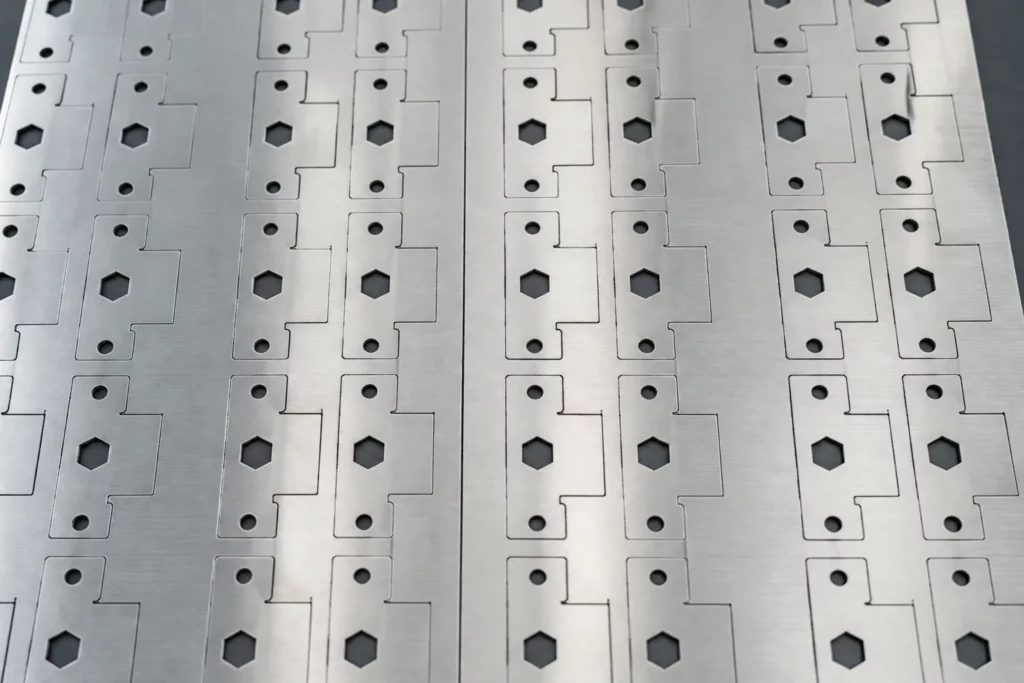
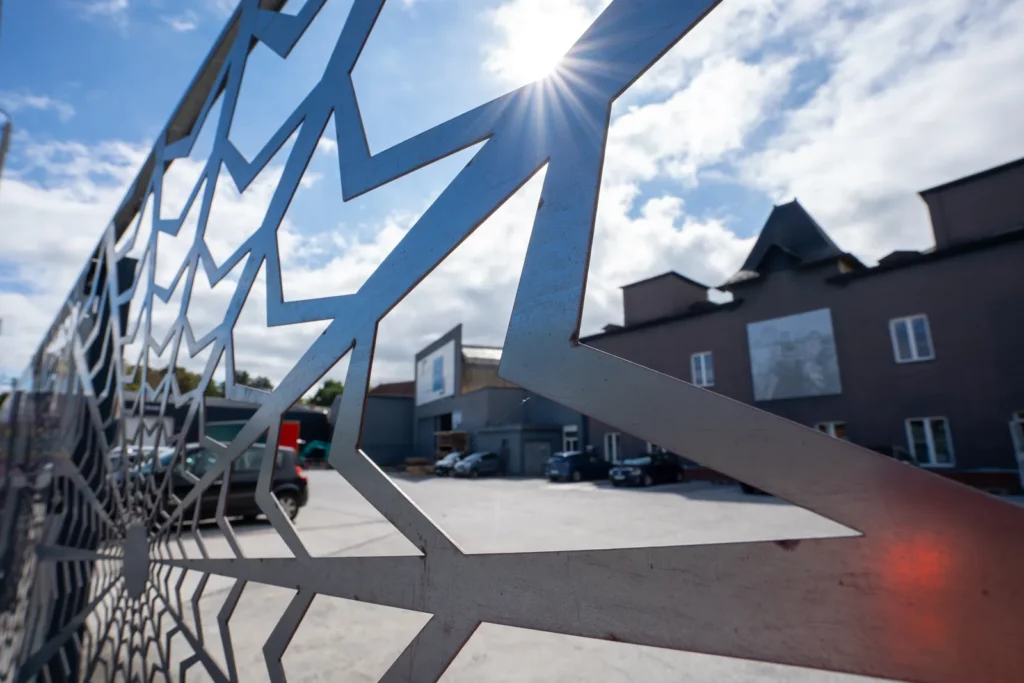
This technology allows us to produce complex cut parts, sheet metal components and technical parts that demand precision, flexibility and repeatability.
But our ambition does not stop at cutting.
Equipment
Our fibre laser offers cutting capacity that meets the demands of industrial production.
Its 4,000 × 2,000 mm working area lets us process large sheets and optimise part nesting to reduce material waste.
Its 12 kW of power provides ample capacity for working different materials and thicknesses on an industrial production basis.
The machine is therefore particularly well suited to precision sheet metal parts, complex cutting and production requiring great flexibility.
Complementarity
At TPS, the laser is not seen as a stand-alone cell.
It is part of a complementary industrial set-up that allows the manufacturing process to be built around the product.
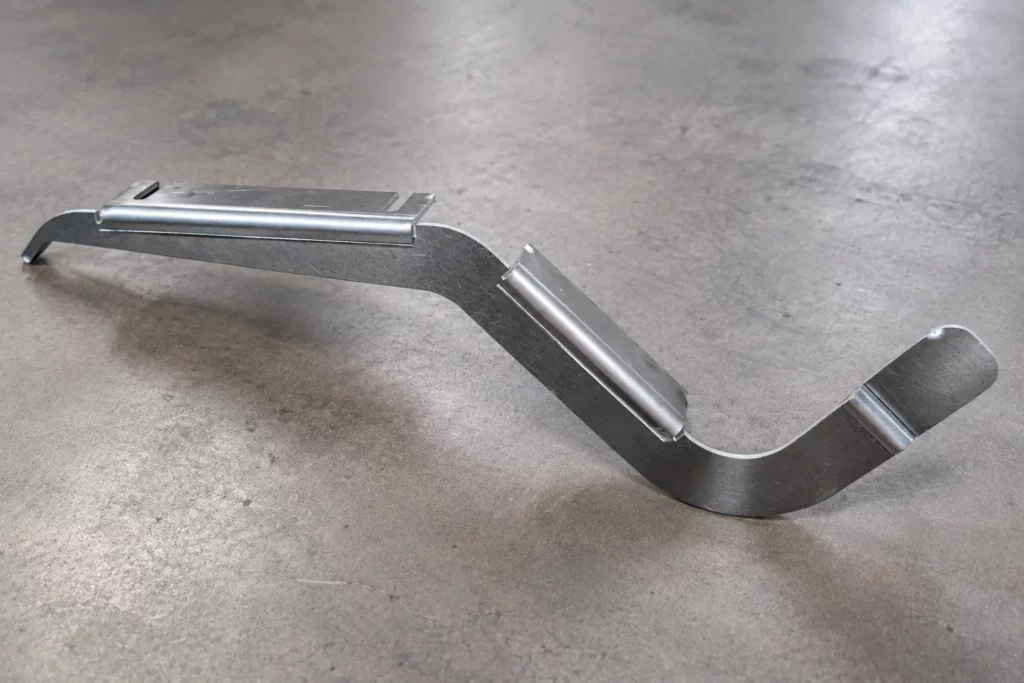
A part can be laser cut, then bent to obtain its final geometry.
Another can be cut, perforated, then formed.
A complex part can combine laser cutting and punching, each used where its process offers the greatest advantage.
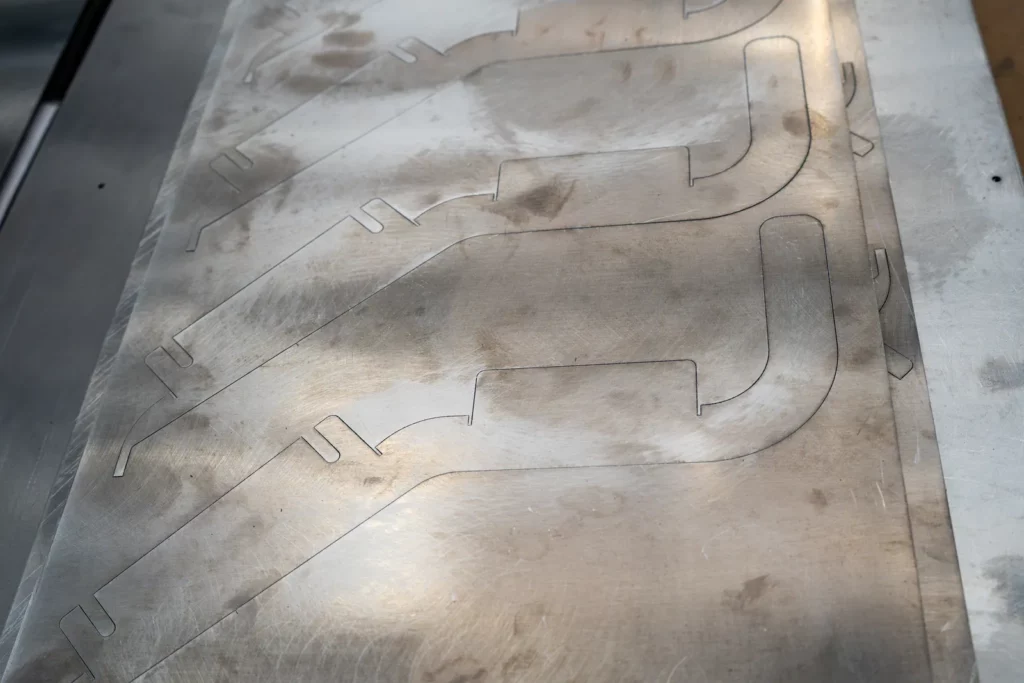
A perforated sheet can have its outline laser cut before being bent, rolled or assembled.
This complementarity means technologies are not pitted against each other but combined intelligently.
Laser + perforationLaser + bendingLaser + punchingLaser + formingLaser + perforation + bending
The best manufacturing routing is the one that uses each technology where it performs best.
Process
This approach changes the nature of what we offer.
We can do more than supply you with a cut sheet.
We can study the complete processing of your part and work out how to sequence the different processes to obtain the final product.
The laser handles cutting when its flexibility is an asset. Perforation comes in when a repetitive pattern and mechanical productivity pay off. Punching can offer another answer for certain geometries. Bending and forming then give the part its final geometry.
Each cell becomes a building block of the same industrial process.
This organisation also limits transfers between suppliers and keeps manufacturing under control on a single industrial site.
Applications
The addition of the laser strengthens our ability to produce precision sheet metal parts and technical metal components.
We can get involved from the product design stage to identify the most relevant combination of processes.
The aim is not to decide which machine should make your part.
The aim is to decide which combination of technologies will produce it with the best quality, lead time and cost.
This is particularly relevant for complex parts, small and medium series, prototypes and products whose geometry is still evolving.
Industrialisation
Having a part cut by one supplier, punched or perforated by a second, bent by a third and then assembled elsewhere multiplies flows, inspections and interfaces.
At TPS, we can think differently.
The different processes are brought together in a single industrial environment.
This makes it possible to build a consistent routing around the product, limit intermediate transport and keep better control of quality and lead times.
For the buyer, it also means a single industrial contact for several processing operations.
Fewer interfaces, fewer flows, more control.
Capabilities
Send us your 2D file, your 3D model or your specifications.
We study the part as a whole and determine the most relevant combination of processes: laser, perforation, punching, bending, forming or assembly.
Search the site
Enter: see all results · Esc: close