Sheet metal work
From flat sheet to formed part
Bending and forming complement our cutting, perforation and punching capabilities to turn sheet metal into technical parts ready to go into your assemblies.
Home » Bending & forming
These are supplemented by our deep drawing, curving and rolling capabilities, so that forming can be adapted to the geometry and constraints of each part.
TPS has 3 press brakes, including a robotic press brake for large series, and 3 qualified press brake operators.
Expertise
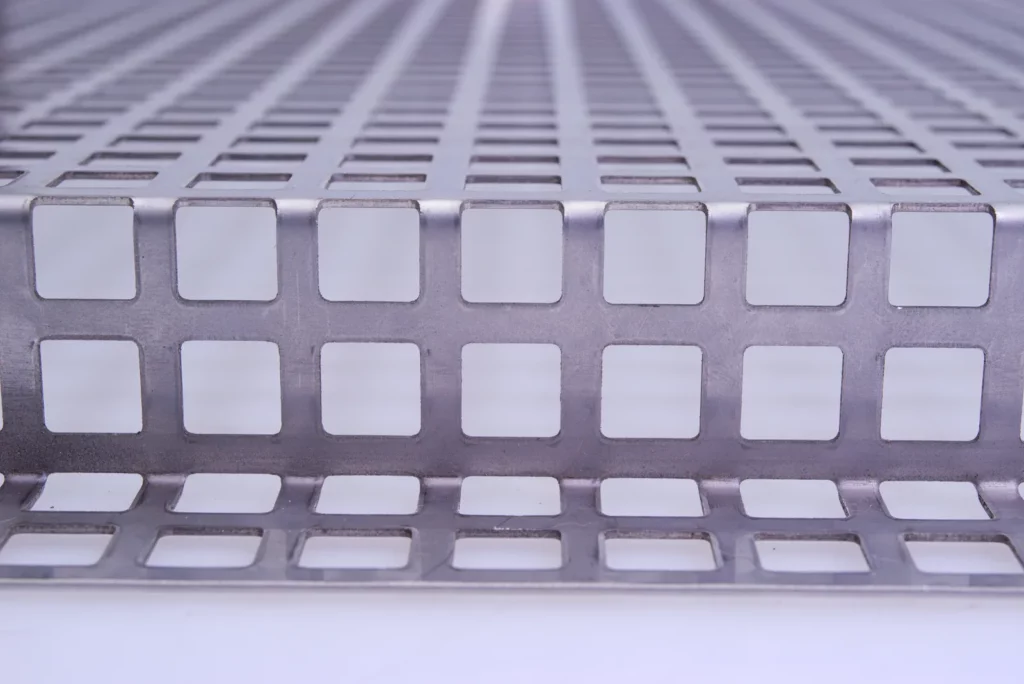
Perforated sheet does not bend like solid sheet.
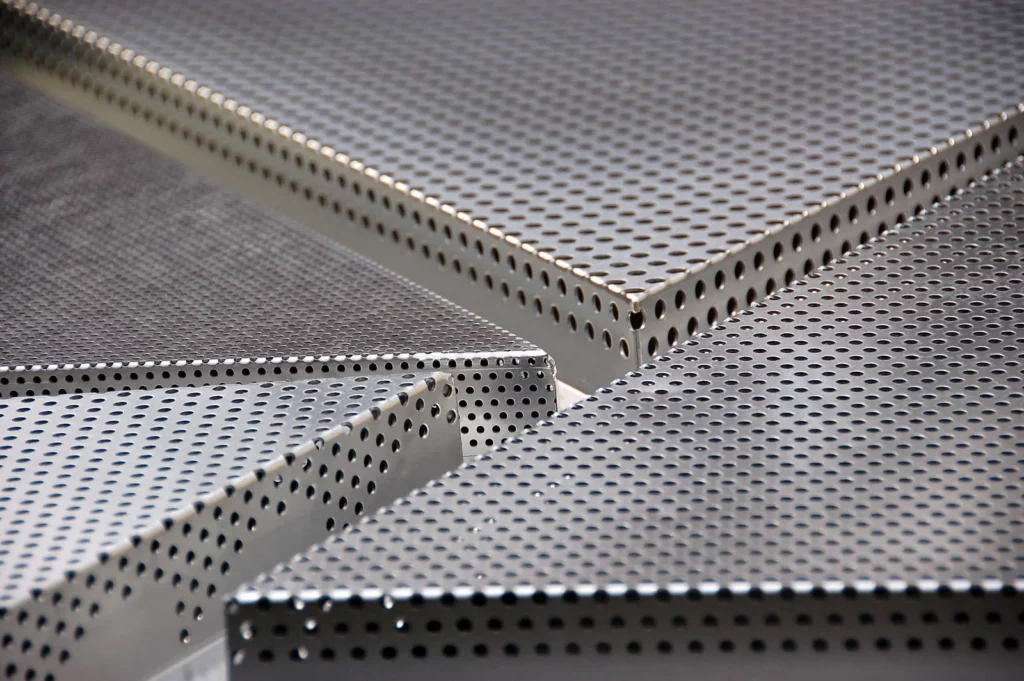
Perforation locally changes the cross-section of the material and therefore how the sheet reacts to bending forces. The position of the holes relative to the bend line, their geometry, their layout and the open area can all affect deformation, springback and the stability of the bend.
The pattern direction and the distance between the holes and the bend zone must therefore be built into the process definition.
This know-how is a real advantage for TPS: our experience in perforation and forming means we can handle both solid and perforated sheet, in a range of materials and alloys.
We do not discover the constraints of perforation at the bending stage: we build them in from the design of the part.
Bending
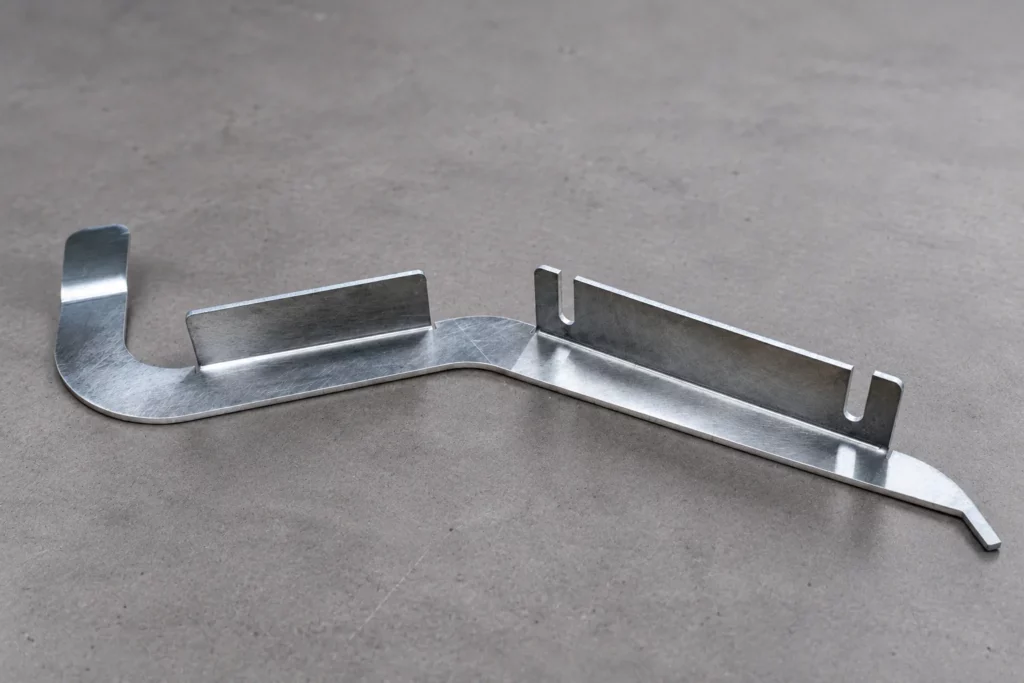
Our presses can produce parts with a wide range of geometries, from simple bends to parts that need several bends and a controlled manufacturing sequence.
The choice of tools, sequence and bending parameters is adapted to the material and geometry to guarantee the precision and repeatability of the parts.
For large, repetitive production runs, our robotic press brake adds automation capacity and highly consistent output.
From prototype to large series, the production level is matched to what your part needs.
Forming
When bending is no longer enough to achieve the required geometry, TPS can also bring in other forming processes.
Our Pressix press can handle deep drawing and forming operations that require greater deformation of the material.
Curving and rolling give the sheet curved or cylindrical shapes, depending on the part characteristics.
These processes broaden our ability to manufacture metal components with different geometries and to find the most relevant forming process for each project.
Complementarity
Forming is rarely the only step in manufacturing a part.
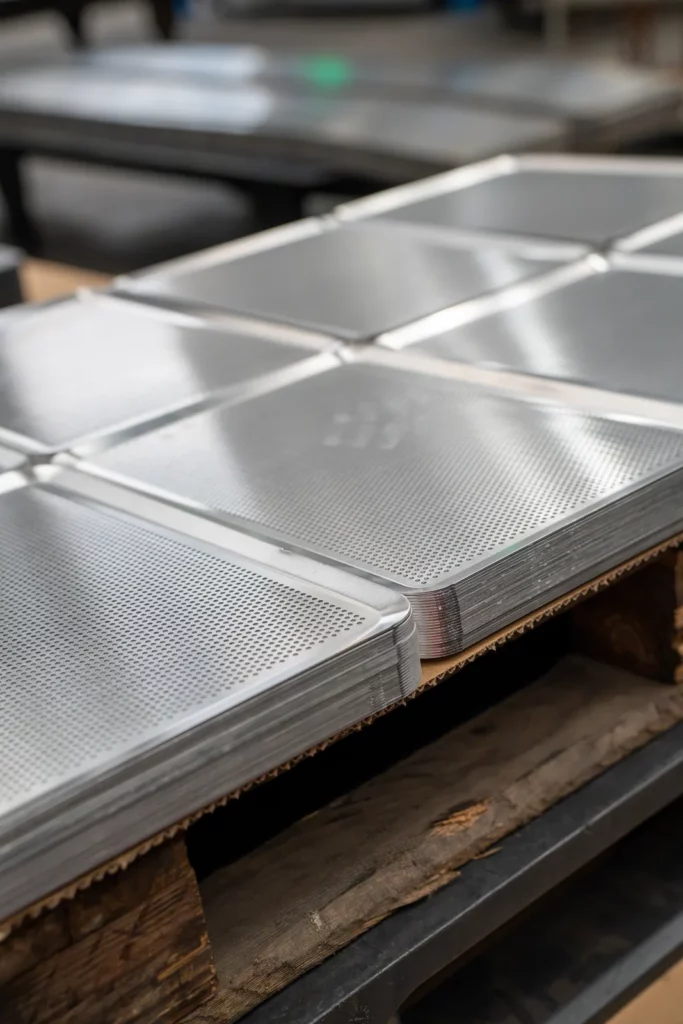
A part can be laser cut then bent, punched then formed, perforated then bent, or combine several cutting and forming operations.
This complementarity between TPS’s cells makes it possible to build a consistent manufacturing routing around the product.
Laser, perforation, punching, bending, deep drawing, curving or rolling: we combine processes to suit the part, its constraints and its volumes.
Capabilities
With 3 press brakes (one of them robotic), 3 qualified operators, deep drawing capability on a Pressix press and curving and rolling equipment, TPS has a set of technologies that take you from flat sheet to formed part.
This capability directly complements our expertise in cutting, perforation and punching.
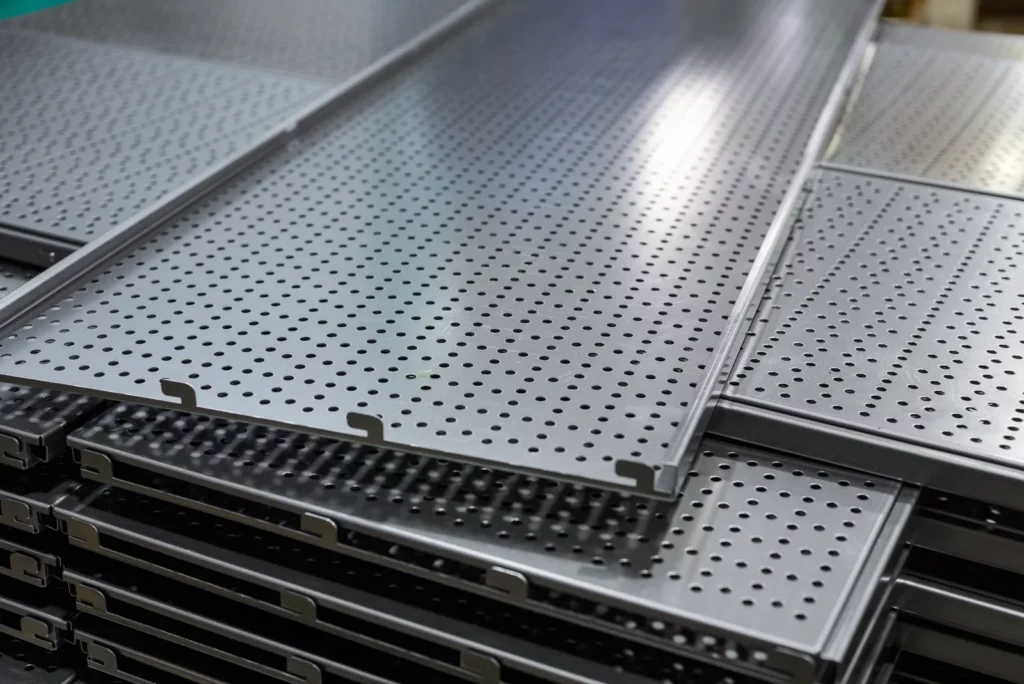
From cutting to forming: several processes, one goal – manufacturing your part.
Search the site
Enter: see all results · Esc: close