Sheet metal work
Mechanical precision for your technical parts
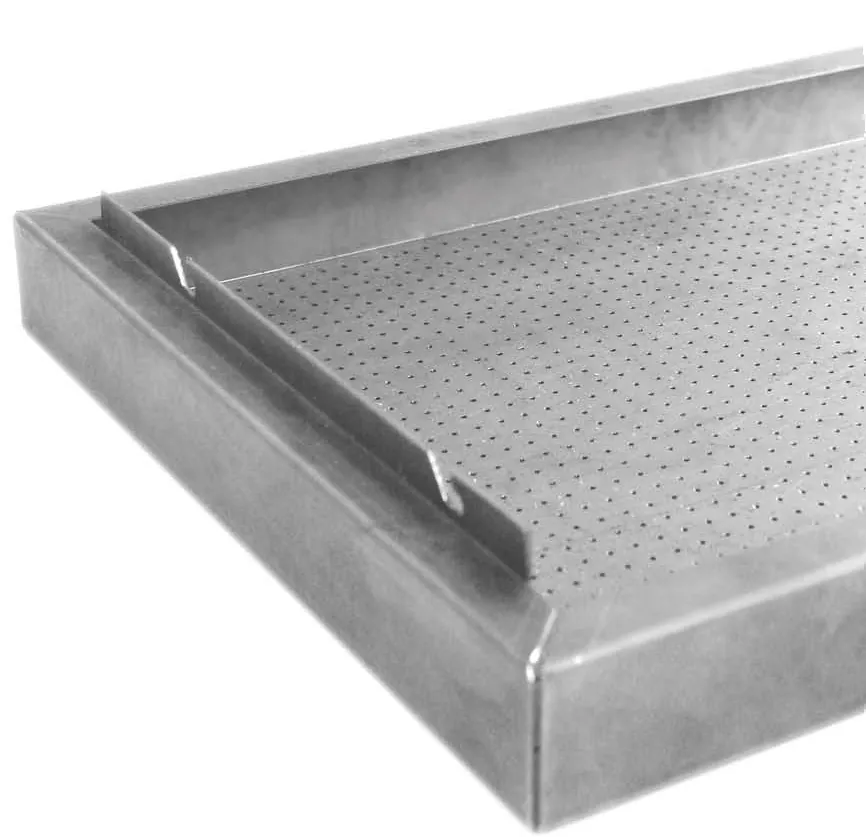
Punching produces a wide variety of shapes and cut-outs in sheet metal quickly and repeatably.
Home » Punching
A fast, repeatable technology that is particularly well suited to industrial production.
At TPS, this technology is part of a broader approach to manufacturing metal and sheet metal parts, where each process is chosen according to the geometry, material, volumes and product requirements.
Punching can produce cut-outs, openings, notches, embossings, geometric shapes and forming operations that can be built directly into the manufacturing routing.
Industrialisation
The main advantage of punching is its ability to reproduce a geometry quickly and very consistently.
For repetitive production, using suitable tools delivers excellent productivity while keeping the parts consistent.
The process is particularly attractive when parts have many openings, cut-outs or repeated shapes.
The choice of tooling and manufacturing sequence also helps optimise cycle time and material consumption.
Punching turns a digital geometry into a part that can be repeated at industrial rates.
Shapes
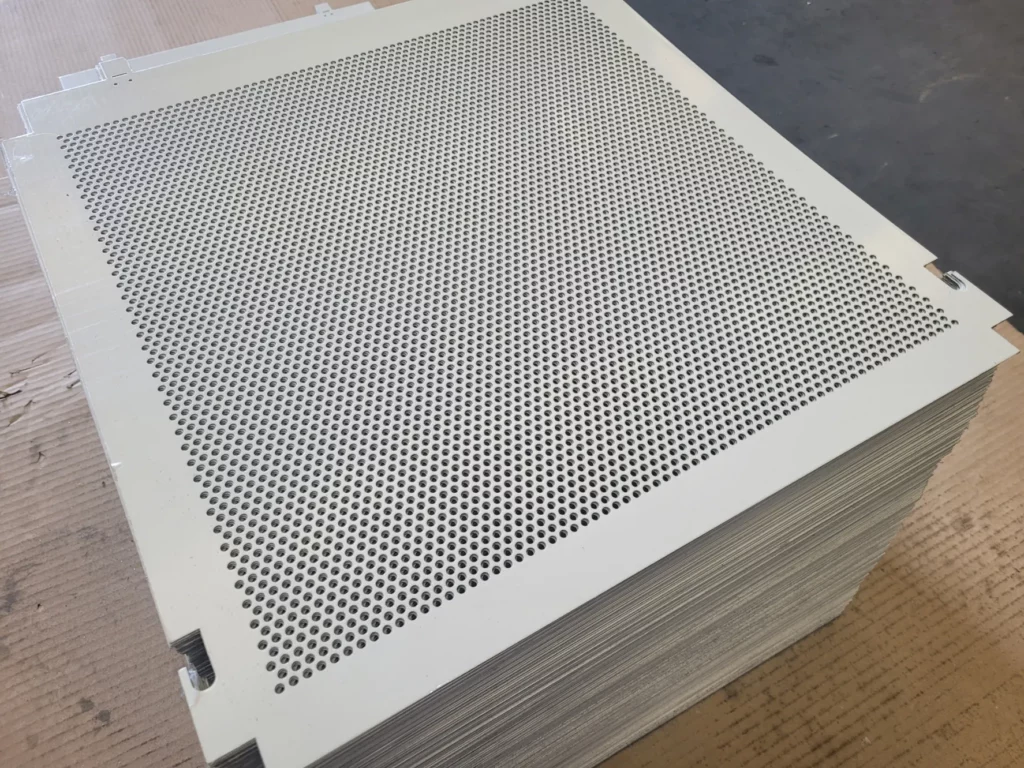
Punching can do far more than make simple holes.
Depending on the tooling used, the process can include different geometries and operations: openings, slots, cut-outs, notches, specific shapes and random perforations or forming operations.
This versatility makes it possible to produce technical parts without multiplying manufacturing operations.
Developing or adapting specific tooling also allows particular geometries to be included when standard tools do not meet the need.
Tooling
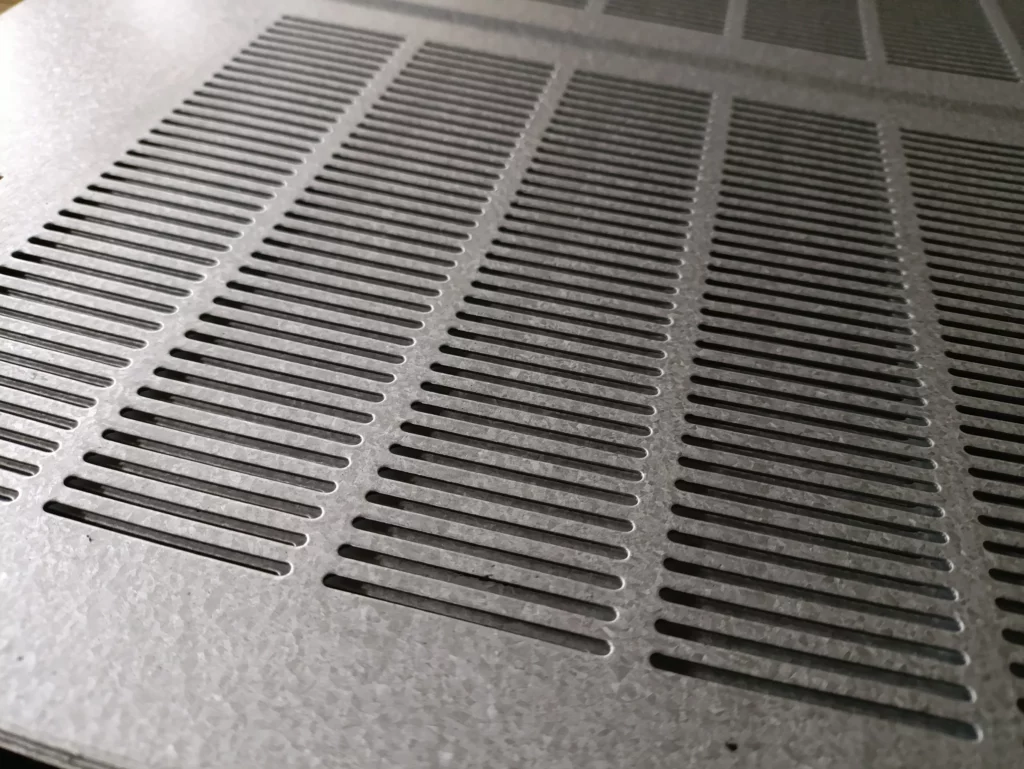
Punching has been part of TPS’s expertise for 25 years. This experience has allowed us to build up a large tool stock covering many geometries and configurations available from our catalogue.
This diversity lets us respond quickly to many requirements without developing specific tooling, and optimise manufacturing for the geometry required.
Need punching? We already have a wide choice of tools and geometries to do it.
Processes
At TPS, we do not see processing technologies as competing with each other.
One part may be made more efficiently by punching, another by laser, another by mechanical perforation.
And some parts need several processes combined.
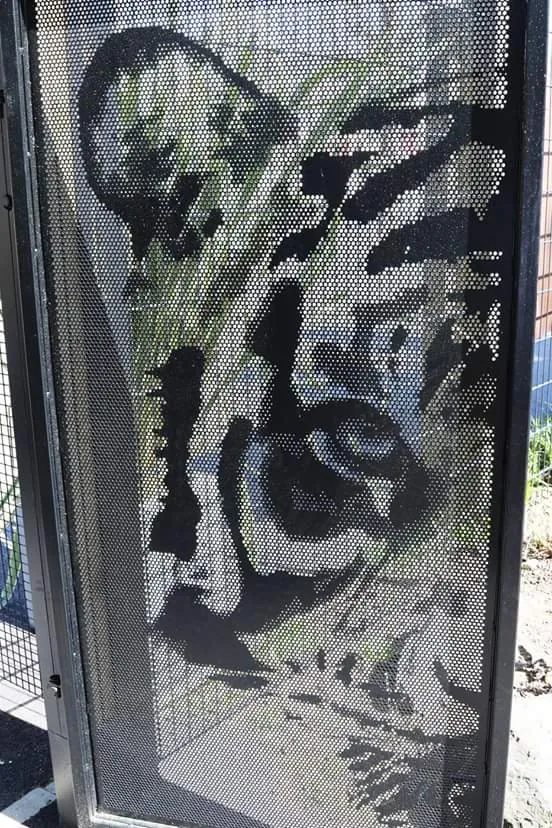
The laser can handle complex contours, punching the repeated shapes and mechanical operations, while perforation can quickly produce a regular pattern over a large surface.
This complementarity means we can build a manufacturing routing suited to the product rather than imposing a single technology.
We choose the process to suit the part, not the part to suit the process.
Production cells
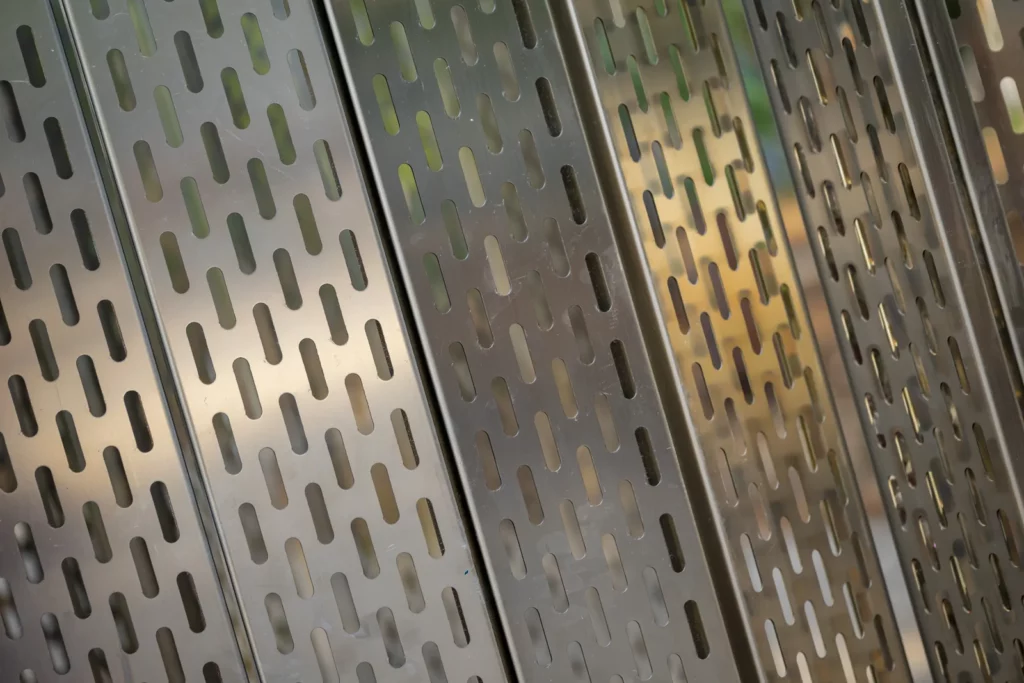
Punching fits naturally into a routing that includes several operations.
A part can be laser cut, then bent.
It can be punched, then bent.
It can combine laser cutting and punching to optimise the different geometries.
It can also include perforation before or after the cutting and forming operations, depending on the product.
This organisation brings several operations together in a single industrial environment and keeps the manufacture of the whole part under control.
Our capability is not limited to carrying out one operation: it is about building the process that will manufacture your product.
Production
Punching can be built into different types of production depending on the geometry and volumes.
For a product under development, it allows a design and its manufacturing process to be validated quickly.
For recurring production, optimising tools and work sequences helps achieve productivity suited to the volumes.
The aim remains the same: a compliant, repeatable part that makes economic sense for its production level.
Method
At TPS, every project is studied on its own merits.
We analyse the material, thickness, dimensions, geometry, volumes and manufacturing requirements to determine the most relevant process.
Punching alone, laser alone or a combination of several technologies: we build the manufacturing routing around your part.
Send us your drawing, your 3D file or your specifications.
We will study the best combination of punching, laser cutting, perforation and sheet metal operations to turn your design into an industrial part.
Mechanical precision. Industrial repeatability. The flexibility of integrated production facilities.
One part. One controlled process. One industrial partner.
Search the site
Enter: see all results · Esc: close